


Know Your Bread
Is Your Daily Bread Helping or Hurting You? Make This Simple Xchange for Better Health
Not All Bread is Created Equal
Let’s be honest – who doesn’t love bread? Toasted, buttered, dipped in soup, or used as the base for a quick sandwich… it’s a staple that shows up on many tables. But here’s the truth most of us were never told growing up: not all bread is created equal.
In fact, most supermarket bread is a far cry from the nourishing loaves our ancestors once enjoyed. If you’re reaching for the cheapest loaf on the shelf, it’s time for a simple xchange – one that can radically upgrade your gut health and overall well-being.
The Sad Reality of Commercial Bread
Imagine this: a loaf of “bread” that can sit on the shelf for weeks without going stale. Sounds convenient, right? But have you ever stopped to ask how that’s even possible?
Commercial bread is often made with low-quality, industrially processed wheat that’s been stripped of its natural nutrients. To make up for this, synthetic vitamins are added back in – a weak attempt to replace what nature had already perfectly designed.
- Now mix in a long list of questionable additives:
- Preservatives to extend shelf life
- Dough conditioners and emulsifiers like mono- and diglycerides to make the texture soft and “squishy”
- Seed oils (often rancid by the time they’re used)
- Sugar or corn syrup for flavour and browning
- Flour “treatments” with bleaching agents
- And let’s not forget glyphosate – a widely used chemical in wheat farming that can disrupt your gut microbiome and has been linked to a number of health issues
- These ingredients may not make you sick overnight, but the accumulative damage over time? It’s real. Chronic inflammation, digestive issues, fatigue, blood sugar crashes… it all adds up.
Read the Label – It’s Your First Line of Defence
A quick rule of thumb:
If the ingredient list includes more than flour, water, salt, and natural sourdough culture (or yeast) – put it down and walk away.
Bonus points if your bread includes whole ingredients like olives, jalapeños, herbs, sun-dried tomato, or feta. But if it reads like a chemistry experiment? Your gut deserves better.
So, What’s the Better Xchange?
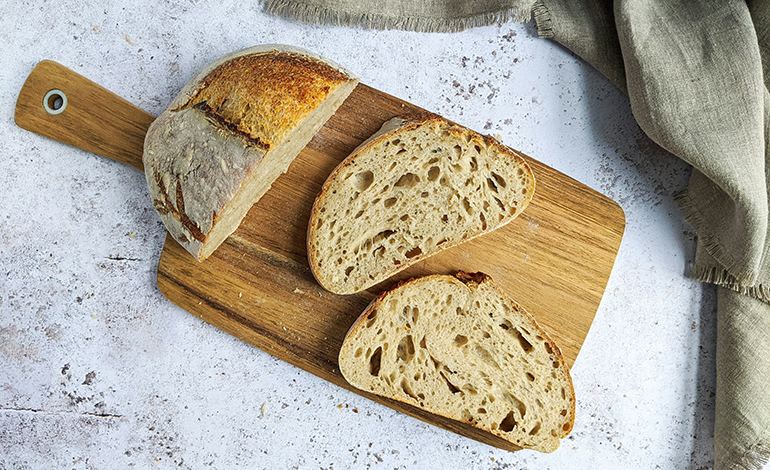
Enter: Sourdough. The real kind. The slow-fermented, naturally leavened, gut-friendly kind – like the beautifully baked loaves from our Health Xchange – Witbank Food Club suppliers Artos Bakery and Kneadful Things.
Sourdough is made using a live culture – a combination of wild yeasts and beneficial bacteria – that slowly ferment the dough over time (usually 12–48 hours). This process:
- Breaks down gluten, making it easier to digest
- Lowers the glycemic index, reducing blood sugar spikes
- Increases bioavailability of nutrients like zinc, magnesium, and B vitamins
- Produces gut-friendly compounds like lactic acid
Unlike fast bread that’s churned out in a few hours using chemical shortcuts, sourdough is patient. And your gut loves patience.
But Wait – Bread is Still Bread
As much as we love high-quality sourdough, here’s an important caution: bread is still bread.
It’s not meant to be the foundation of your diet – even the best artisan sourdough. The real focus should be:
- Fresh living foods (packed with colour and phytonutrients)
- Good fats (hello avocado, olive oil, raw nuts)
- Quality proteins (think pasture-raised, clean sources)
Enjoy sourdough as an occasional side – not the star of every meal. And when you do indulge, pair it wisely. Add protein or healthy fats to slow down the glycemic impact. Think poached eggs with rocket and avo on toast. Or roasted veg with hummus on a toasted slice.
Bonus tips to make bread even better for you:
You can still enjoy good quality bread if you do it with wisdom, moderation and intention.
Freeze it – Freezing bread helps form resistant starch, which is digested more slowly and causes a lower blood sugar spike. Just toast it straight from frozen for best texture and benefit.
Toast it – Toasting also increases resistant starch, further reducing its impact on blood sugar levels compared to fresh bread.
Don’t refrigerate sourdough – The fridge makes it go stale faster by drying it out and changing the texture. Rather slice and freeze your loaf, then toast what you need.
Take a shot of vinegar – A tablespoon of diluted, quality, preservative-free vinegar (like apple cider or barrel-aged balsamic) before eating bread can blunt the post-meal blood sugar rise even further.
Avoid high-glycaemic toppings – Try skip the jams, honey and syrups. Instead, pair your sourdough with real farm-fresh butter, eggs, unsweetened nut butters, herb or tomato pesto’s and quality cheese, or smashed avocado for a blood sugar-friendly, nutrient-rich combo. If you must have something sweet on your toast on the odd occasion – be strategic and eat it as a dessert after a nutrient-dense lunch – never on it’s own, and never at breakfast when your blood sugar is unstable.
The Best Bread You Can Buy
If you’re going to eat bread, make it count.
- Artisanal sourdough is the best quality bread you can buy.
- Mass-produced supermarket bread is highly inflammatory and offers little nutritional value.
It’s a small swap that delivers big rewards for your energy, digestion, and long-term health. And honestly – with flavour options like olive, jalapeño, and seeded rye… why settle for bland and bloated?
What Happened to Real Bread?
In Bible times, bread was a blessing. A true, health-promoting staple. But today, thanks to industrial farming, altered wheat, and profit-driven food systems, bread no longer resembles what it once was.
In our next blog, we’ll dive deeper into the history of wheat, how it’s changed over centuries, and what that means for your health today. We’ll also explore why some people can tolerate ancient grains and sourdough but react badly to modern wheat.
Xchange Your Bread, Xchange Your Health
This journey is about making simple, sustainable swaps – and trading your supermarket loaf for real sourdough is one of the easiest, tastiest steps you can take.
- Better ingredients
- Better digestion
- Better health
Stay tuned for the bread blog where we unpack the ancient wisdom of bread, what went wrong, and how to reclaim it.
Want to order beautiful, authentic, freshly baked sourdough in Witbank?
Sign up to the Health Xchange Witbank Food Club – Learn more by clicking on the button below
References:
• Freezing and toasting bread increases resistant starch, which can reduce postprandial blood glucose response.
Reference:
https://pubmed.ncbi.nlm.nih.gov/28077367/
(Resistant starch in foods: A review and research update)
• Resistant starch improves insulin sensitivity and promotes beneficial gut bacteria.
Reference:
https://www.ncbi.nlm.nih.gov/pmc/articles/PMC6823188/
(Health benefits of resistant starch: a review)
• Vinegar (acetic acid) before meals can reduce blood glucose response and improve insulin sensitivity.
Reference:
https://pubmed.ncbi.nlm.nih.gov/14694010/
(Vinegar ingestion at bedtime moderates waking glucose concentrations in adults with well-controlled type 2 diabetes)
• Sourdough fermentation improves the digestibility of gluten and reduces the glycaemic index of bread.
Reference:
https://www.ncbi.nlm.nih.gov/pmc/articles/PMC7866477/
(Health benefits of sourdough fermentation: a review of the evidence)
• Sourdough fermentation can degrade anti-nutrients such as phytic acid, improving mineral absorption.
Reference:
https://www.ncbi.nlm.nih.gov/pmc/articles/PMC3705317/
(Influence of fermentation on phytic acid content in whole grains)
• Commercial bread often contains additives such as emulsifiers, preservatives, and seed oils, which may negatively impact gut health and promote inflammation.
Reference:
https://www.ncbi.nlm.nih.gov/pmc/articles/PMC4276984/
(Dietary emulsifiers impact the gut microbiota and promote colitis in mice)
• Bread with added fats, proteins, or vinegar can lower glycaemic response compared to bread eaten alone.
Reference:
https://academic.oup.com/ajcn/article/66/5/1264/4655962
(Effect of meal composition on postprandial glycemic response)
• Refined and processed bread contributes to inflammation and chronic disease when consumed regularly.
Reference:
https://www.ncbi.nlm.nih.gov/pmc/articles/PMC7692708/
(Ultra-processed foods and inflammation: review of the current evidence)