

Imagine a fruit so vibrant and packed with purpose that it became a symbol of love, life, and divine care – woven into Scripture from Genesis to the high priest’s robe. Meet the pomegranate: a gift from God that nourishes our bodies, delights our senses, and reminds
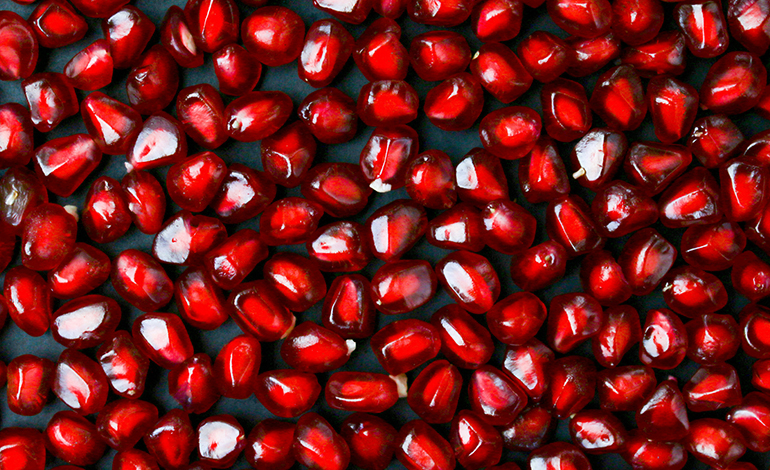
God, in His infinite wisdom, created foods that not only nourish but also protect, heal, and sustain our bodies. The pomegranate is a shining example of this divine intention – a nutritional gem encased in a leathery rind, bursting with ruby-red arils. Each seed carries a wealth of nutrients designed to fuel life, restore balance, and promote resilience. Its design is not only beautiful and symbolic but also functional, reinforcing the truth that creation holds the blueprint for health.
Biblical Beginnings: From Eden to the Temple
Long before modern science analysed its seeds, the pomegranate bloomed in sacred texts. Though not explicitly named in Eden’s Garden, it appears throughout the Old Testament: hanging from Solomon’s temple pillars and carefully sewn into the hem of the high priest’s ephod as a row of alternating gold bells and crimson-and-indigo embroidered pomegranates (Exodus 28:33–34). This motif spoke of holiness, abundance and the fruitfulness God intended for His people.
Symbolism of Love, Unity and Resurrection
Early Church writers saw in the pomegranate’s hundreds of arils a picture of the Church itself – many parts made one, united in Christ. Its vibrant red juice echoed both Christ’s sacrificial blood and the promise of new life after death. In Christian art, this fruit often appears in depictions of the Virgin Mary or resurrected Christ, symbolising fertility, eternal love and victory over death.
God’s Nutritional Masterpiece

Divine Design
God, in His infinite wisdom, created foods that not only nourish but also protect, heal, and sustain our bodies. The pomegranate is a shining example of this divine intention – a nutritional gem encased in a leathery rind, bursting with ruby-red arils. Each seed carries a wealth of nutrients designed to fuel life, restore balance, and promote resilience. Its design is not only beautiful and symbolic but also functional, reinforcing the truth that creation holds the blueprint for health.
What Are Polyphenols and Why They Matter
Polyphenols are naturally occurring compounds found in plants, responsible for much of their colour, flavour, and health-giving properties. These powerful antioxidants protect the body against oxidative stress – a key driver of chronic disease and ageing. Pomegranates are especially rich in punicalagins and anthocyanins.
- Punicalagins: Found in the juice and peel, these potent antioxidants are known to lower inflammation, reduce oxidative damage in cells, and protect the heart.
- Anthocyanins: The pigments giving pomegranate its vibrant red hue, anthocyanins contribute to skin elasticity, blood vessel integrity, and cognitive support.
Studies have linked these polyphenols to reduced blood pressure, lower LDL (bad cholesterol), and enhanced memory function. They also support hormonal balance and slow signs of skin ageing by protecting collagen fibres.
Fueling the Microbiome: Akkermansia’s Bloom
One of the most exciting revelations in nutrition science is the role of polyphenols in supporting a thriving gut microbiome. Specifically, pomegranate compounds act as prebiotics – feeding beneficial gut bacteria like Akkermansia Muciniphila, which is considered a keystone species for metabolic health.
When nourished, Akkermansia helps:
- Strengthen the gut lining
- Reduce systemic inflammation
- Improve insulin sensitivity
- Regulate fat storage and body weight
A robust population of this bacterium is associated with improved immune tolerance and even protection against age-related diseases. Pomegranates, through their fibre and polyphenol content, essentially fertilise your inner ecosystem – helping your gut become a more efficient, anti-inflammatory, and fat-burning machine.
The Urolithin A Connection and Mitochondrial Renewal
Here’s where the pomegranate’s power becomes almost futuristic: when its polyphenols reach the colon, gut microbes convert them into a powerful postbiotic called urolithin A. This compound triggers mitophagy, a natural process where old or dysfunctional mitochondria (the energy-producing centres of cells) are cleaned up and replaced with new, efficient ones.
This leads to:
- Increased muscle protein synthesis
- Improved exercise recovery
- Reduced fatigue
- Protection against sarcopenia (age-related muscle loss)
In clinical trials, supplementation with urolithin A has improved endurance and cellular energy in older adults. But why supplement when God has given us this capability directly through food? Pomegranates, as part of a regular diet, support cellular rejuvenation – making you feel younger and stronger from the inside out.
Manganese, Fertility and Beyond
Beyond polyphenols, pomegranates are a source of manganese – a trace mineral involved in bone development, wound healing, blood sugar control, and antioxidant enzyme production (like superoxide dismutase). Manganese is essential for mitochondrial function, joint integrity, and healthy connective tissue. It also plays an important role in reproductive health, supporting hormone production and the development of healthy eggs and sperm.
Historically, the pomegranate symbolised fertility and divine blessing, with its abundance of seeds representing fruitfulness and new life. It was often gifted to couples as a token of reproductive hope and divine multiplication. Modern research shows that the antioxidants and minerals within pomegranates support reproductive hormone balance in both men and women – aligning poetic tradition with powerful physiological truth.
From ancient symbolism to cutting-edge science, the pomegranate confirms what the Bible shows us repeatedly: God’s provision is always timely, intelligent, and overflowing with life.
Preparing the Perfect Pomegranate
There is something deeply therapeutic about sitting calmly, meditating on God’s goodness as you peel and snack on a fresh pomegranate. In our fast-paced, convenience-driven world, we seldom pause – and what a loss.
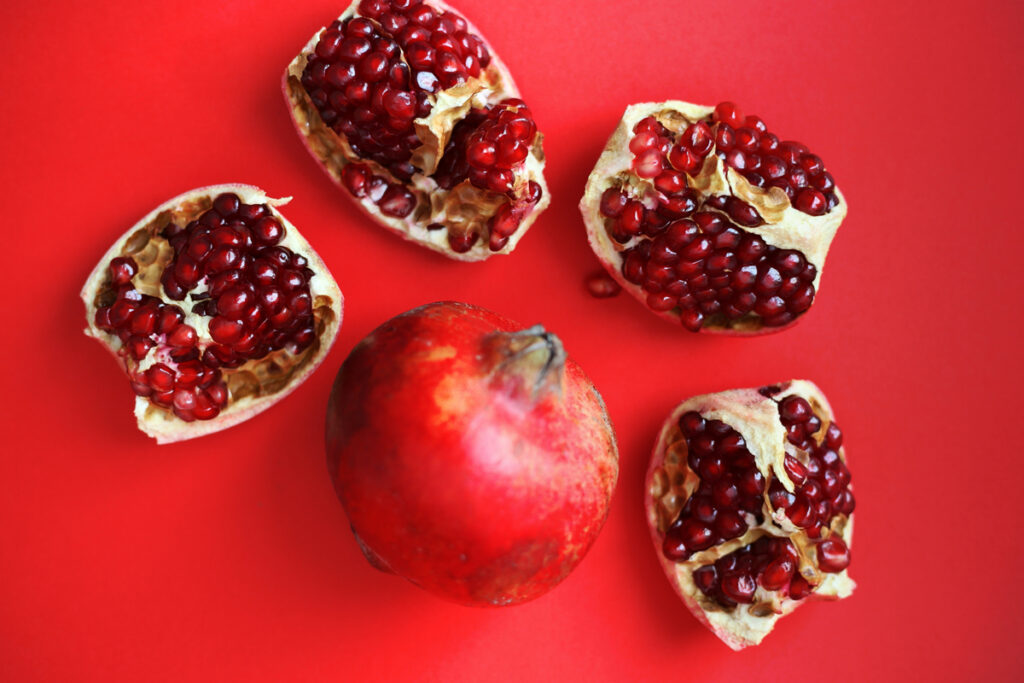
1. Score and Soak: Lightly score the exterior and soak the fruit in a bowl of water for five minutes.
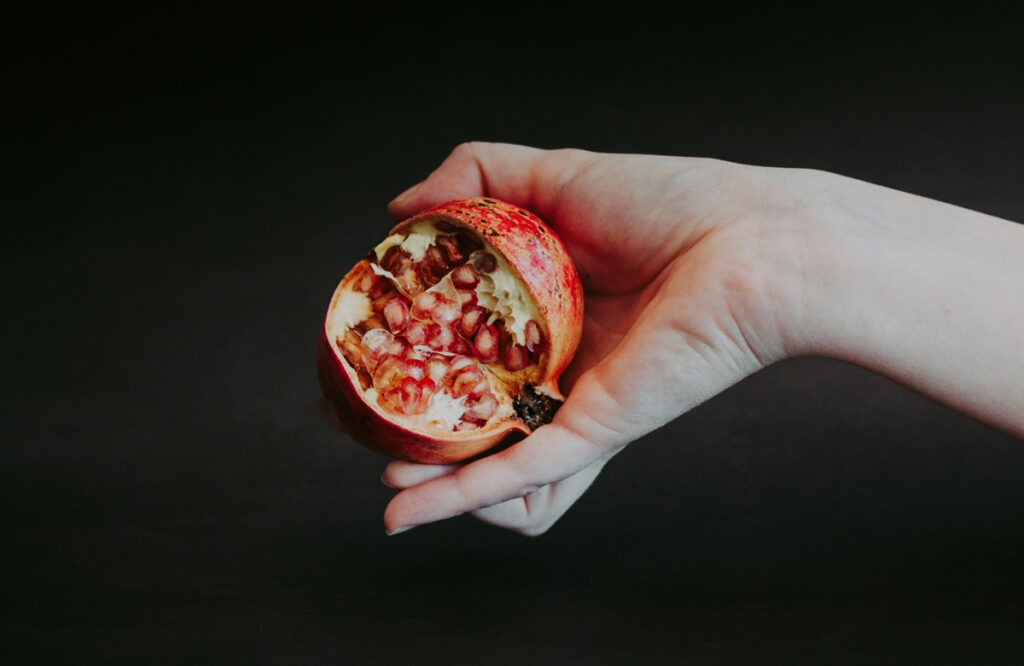
2. Break and Release: Gently open along score lines under water; arils sink, pith floats.
3. Strain and Enjoy: Skim away pith, drain, and pat seeds dry.
TIPS: Chill the fruit first for easier cutting. Use a wooden spoon to tap out stubborn arils.
Beyond the Fresh Fruit: Versatile Pomegranate Forms
Juice: Fresh-pressed juice and concentrate retains punicalagins. Dilute as required , sip as is, mix into smoothies or add to salad dressings.
Dried Arils: Sweet and chewy – perfect in trail mix, sprinkled on porridge or stirred into baking.
Molasses & Syrup: Concentrated reduction, rich in flavour for marinades, glazes and desserts.
Culinary Celebrations: Enjoying the Pomegranate
Breakfast: Crown your yoghurt, smoothie bowl or oatmeal with arils for a fibre and antioxidant boost.
Salads: Pomegranate seeds add a juicy crunch to leafy greens, grains and coleslaws.
Main Dishes: Glaze chicken or lamb with pomegranate molasses; stir fresh seeds into couscous and rice bowls.
Desserts: Layer parfaits, blend into sorbets or sprinkle on chocolate tarts.
Snacks: God’s juicy fruit sweetie.
Crowning Jewel – Embrace the Pomegranate Blessing:
Savouring God’s Gift From its sacred role in Scripture to its modern acclaim as a “superfruit,” the pomegranate invites us to taste God’s thoughtful design. As you relish those ruby seeds, remember they aren’t just delicious – they’re a testament to the Creator who cares for both our spiritual and physical flourishing.
REFERENCES
1. Gil, M. I., Tomás-Barberán, F. A., Hess-Pierce, B., Holcroft, D. M., & Kader, A. A. (2000). Antioxidant activity of pomegranate juice and its relationship with phenolic composition and processing. Journal of Agricultural and Food Chemistry, 48(10), 4581–4589. https://doi.org/10.1021/jf000404a
2. Sharon, G., Garg, N., Debelius, J., Knight, R., Dorrestein, P. C., & Mazmanian, S. K. (2014). Specialized metabolites from the microbiome in health and disease. Cell Metabolism, 20(5), 719–730. https://doi.org/10.1016/j.cmet.2014.10.016
(for polyphenol metabolism and gut microbiota context)
3. Roopchand, D. E., Carmody, R. N., Kuhn, P., Moskal, K., Rojas-Silva, P., Turnbaugh, P. J., & Raskin, I. (2015). Dietary polyphenols promote growth of the gut bacterium Akkermansia muciniphila and attenuate high-fat diet–induced metabolic syndrome. Diabetes, 64(8), 2847–2858. https://doi.org/10.2337/db14-1916
4. Singh, A. K., Sharma, B., & Bhatnagar, D. (2022). Urolithin A: A promising bioactive metabolite from pomegranate and its therapeutic potential. Nutrition Reviews, 80(1), 114–126. https://doi.org/10.1093/nutrit/nuab063
5. Ryu, D., Mouchiroud, L., Andreux, P. A., Katsyuba, E., Moullan, N., Nicolet-Dit-Félix, A. A., … Auwerx, J. (2016). Urolithin A induces mitophagy and prolongs lifespan in C. elegans and increases muscle function in rodents. Nature Medicine, 22(8), 879–888. https://doi.org/10.1038/nm.4132
6. Floegel, A., Kim, D. O., Chung, S. J., Koo, S. I., & Chun, O. K. (2011). Comparison of ABTS/DPPH assays to measure antioxidant capacity in popular antioxidant-rich US foods. Journal of Food Composition and Analysis, 24(7–8), 1043–1048. https://doi.org/10.1016/j.jfca.2011.01.008
(for broader polyphenol antioxidant assays)
7. Hurrell, R., & Egli, I. (2010). Iron bioavailability and dietary reference values. American Journal of Clinical Nutrition, 91(5), 1461S–1467S. https://doi.org/10.3945/ajcn.2010.28674F
(for micronutrient discussions including manganese alongside other trace elements)
8. Baker, J. M., Al-Khanfar, F., & Wolf, P. G. (2019). Trace minerals: nutritional and metabolic roles of manganese. Journal of Nutrition & Intermediary Metabolism, 15, 1–9. https://doi.org/10.1016/j.jnim.2019.03.001