



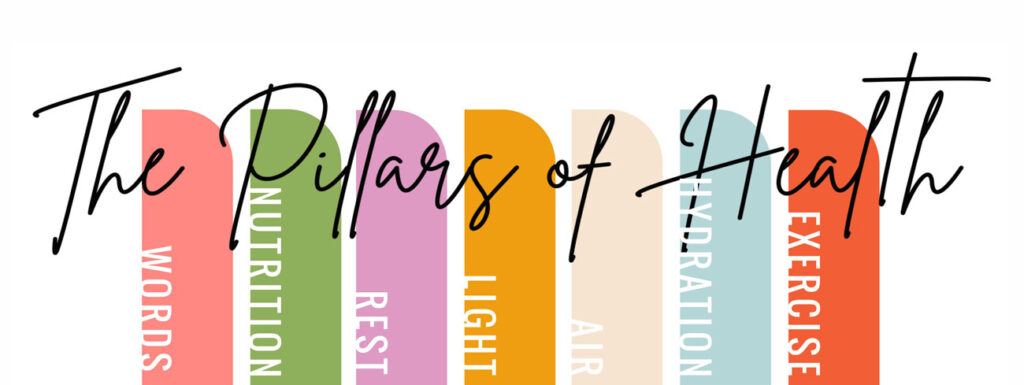
As children of God, we are “fearfully and wonderfully made” in His image. Our bodies are truly remarkable, aren’t they? This intricate organism entrusted to us is a precious gift – the temple of the Holy Spirit – and it’s our duty to care for it properly. While most of us are familiar with the basics of healthy eating and staying active, there’s so much more to consider for optimal health and wellness. That’s why we’re going to explore the 7 key pillars of holistic health.
Get ready for insights that could transform your approach to well-being!
PILLAR 1 – WORDS

Words are more powerful than we often realise. Scientific studies show that self-talk and the language we use daily directly impact our mood, motivation, and even physiological health markers. When we engage in negative self-talk or hear discouraging language from others, the stress hormones cortisol and adrenaline can increase, leading to heightened inflammation and compromised immune function. On the other hand, positive language has been shown to stimulate the release of dopamine and endorphins, improving mood and promoting resilience against stress.
Research in the field of psychoneuroimmunology – a discipline that explores the interaction between psychological processes and the nervous and immune systems—reveals that the language we internalise can physically manifest in our health outcomes. For instance, studies have found that affirming and compassionate self-talk can help lower blood pressure, reduce anxiety, and promote better recovery from illness. Shifting our internal dialogue towards positivity and empowerment can have a profound impact, not just on how we feel, but on how our body functions, proving that words are indeed a vital pillar of health.
The number one priority, as a child of God, is to give The Word first place in your life. Throughout the Bible God gives us nuggets of truth concerning our health. The heavenly Father has created each one of us and knows exactly what we need to function optimally. He loves us so much He provided us with a manual on how to live our best life – it’s called THE HOLY BIBLE or THE WORD OF GOD or the divine person of JESUS (The Word made flesh).
If you make THE WORD OF GOD (JESUS) your foundation, your rock, and final authority in your life – you will have the recipe for success, health, wellness, strength, and longevity!
The Word of God teaches us what foods, disciplines, habits, and choices are best for us. The Word also clearly warns us as to what behaviour opens up the doors for sickness and disease in our lives. It makes sense our maker would know what is best for us right? His ways are higher than our ways and it would be prudent to take heed to what He has to say!
He has also given us His Holy Spirit to help us, lead us, and guide us in all our decision-making. If you trust Him, involve Him, and acknowledge Him in ALL your ways (and in this context, ALL your decision-making concerning your dietary choices and lifestyle choices), The Word of God promises He will direct your paths. (See Proverbs 3:5-6)
Xchange: Negative words for words of life!
The world’s “wisdom” for God’s TRUE wisdom!TAKE-AWAY: God knows what is best for us. Seeking His ways and guidance is key in preserving your health – enabling you to live your best life and fulfill your purpose. Find His Words regarding your health, healing and longevity and speak them!
PILLAR 2 – NUTRITION

Research overwhelmingly supports the benefits of clean eating, which emphasises whole, minimally processed foods and aligns with principles found in the Mediterranean/Biblical diet. Nutrition experts widely agree that prioritising nutrient-dense foods – like fresh vegetables, lean proteins, healthy fats, and fibre – offers far-reaching health benefits, supporting everything from improved energy levels and mental clarity to lower risks of chronic diseases. This approach goes beyond basic sustenance, encouraging a deeper commitment to fuelling the body optimally for long-term wellness.
Often, our meals revolve around pleasure, social connections, or simply convenience, but should we not refocus on genuinely nourishing our bodies? The choice of what we eat has profound implications. Today’s food industry often promotes hyper-palatable, ultra-processed products that not only lack essential nutrients but are also chemically designed to be addictive, encouraging cravings that can overshadow the appeal of natural, wholesome foods. As a result, many of us have unknowingly become “food addicts,” caught in a cycle of processed cravings that compromise both our physical and mental well-being.
If we aspire to live healthier, more vibrant lives, we must break free from the addictive allure of nutrient-devoid processed foods and make the conscious shift toward real, nutrient-rich choices. True vitality demands mindful eating that prioritises high-quality, natural ingredients to support a resilient and disease-free life. Moving forward, it’s also crucial to reflect on when and how we eat, as these factors, along with our mindset, can powerfully influence the outcomes of our dietary choices. In upcoming posts, we’ll dive deeper into these aspects, exploring the practice of nourishing our bodies with intent and care.
If we are to live a long and fruitful life, free of pain and disease, we simply must make every effort to eliminate toxic fake foods devoid of nutrition, break the addictive cycle we may be trapped in, and replace them with real natural nutritionally dense foods so we are able to enjoy and benefit from the real foods
God has called, “good”! Beyond making better choices regarding WHAT we eat, we need to get some understanding of WHEN to eat and our mindsets, attitudes, and practices around HOW and even WHY we eat. (There is a lot to discuss around this topic and we will be sure to unpack this in a future post.)
Xchange: The world’s highly processed fake ‘foods’ for God’s whole foods!
Take away: Ask God to help you change the way you think, feel and act about food – to rather be motivated by the desire to nourish your body; instead of being driven by cravings, social pressure and the need to just fill your stomach with the cheapest, easiest harmful fast foods.
PILLAR 3 – REST

Rest and sleep are crucial pillars of health that are often overlooked in our fast-paced world. Just as our bodies need nourishment and movement, they also require adequate downtime to function optimally. In fact, the concept of rest is not just a modern convenience but a principle rooted in the very fabric of life itself. It’s worth noting that rest was part of the original design for life; after creating the world in six days, God rested on the seventh. If even the Creator recognised the need for rest, how much more should we?
In today’s “work hard, play hard” society, we often rush from one responsibility to the next, constantly over-stimulated and distracted. We become so busy that we neglect the essential practice of stillness. This relentless pace can severely impact our physical, mental, and spiritual health. We frequently sacrifice relaxation and quality sleep, resulting in significant consequences for our overall well-being.
Getting sufficient rest is vital for health. When we’re fatigued, our bodies and minds can’t perform at their best. Nighttime is when healing occurs: muscles repair, brain tissue restores, and nerves recharge. Without adequate sleep, we may experience irritability, concentration difficulties, and a decline in creativity. Prolonged sleep deprivation can lead to even more severe issues, including exhaustion, depression, and cognitive impairment.
To maintain optimal health and function, it’s essential to prioritise rest, ideally aiming for 7-9 hours of quality sleep each night. By embracing rest as a fundamental aspect of our lives, we can rejuvenate our bodies and minds, allowing us to approach each day refreshed and ready to thrive.
Xchange: Over stimulation for restfulness | Minimal poor sleep for enough deep sleep.
Take away: One of the most important things you can do for your health is to prioritise getting enough quality sleep. If you are unable to sleep properly you must seek out the underlying cause and actively take steps to address it.
Pillar 4: Light

Despite its negative reputation, moderate sun exposure offers numerous health benefits. Sunshine not only supports plant growth but also helps us unlock the nutritional value in our food. The sun’s rays convert substances in our skin into vitamin D, a crucial nutrient for our bodies. Additionally, sunlight acts as a natural antiseptic and plays a vital role in hormone synthesis, supporting thyroid function and boosting serotonin levels for a stable mood.
While excessive sun exposure can increase the risk of skin cancer, a little morning sunlight can significantly enhance overall well-being. We are designed to be active outdoors, so it’s essential to enjoy the sun in moderation.
In contrast, our increasing reliance on electronic devices exposes us to artificial blue light, which can lead to serious eye problems such as macular degeneration, dry eyes, and cataracts. Moreover, prolonged exposure can disrupt sleep, leading to various health issues. However, we can take simple protective measures, such as using blue light-blocking glasses, adjusting screen brightness, and limiting device use, to safeguard our vision and overall health.
Xchange: Artificial blue light for natural red sunlight.
Takeaway: Reduce your peak day sunlight exposure and increase your early morning sunlight exposure on both your skin and in your eyes.
Take active measures to reduce your exposure to artificial blue light – especially in the 3 hours leading up to bedtime.
PILLAR 5: AIR

Let’s discuss air, the most vital element for our existence. While it may seem simple, the quality of the air we breathe is crucial for our health and wellbeing. Our bodies rely on fresh, pure air; each of our 100 trillion cells requires a steady supply of oxygen to function optimally, and we take about 17,000 breaths a day. When the air is polluted, it negatively affects brain function, mental clarity, mood, and sleep quality, as well as our ability to fend off bacteria and viruses.
For those of us living in urban areas, controlling air quality can be challenging, so it’s essential to purify the air in our homes and workplaces. Furthermore, the way we breathe can significantly impact our wellbeing. Many stressed individuals with poor posture tend to breathe shallowly, which can lead to fatigue, brain fog, weakened immunity, and disrupted sleep.
Mindful, deep breathing is vital for optimal health. Shallow breathing can cause neck and chest muscles to tighten, reducing flexibility over time. So, when you catch yourself breathing rapidly, take a moment to slow down and focus on deep, abdominal breaths. This practice can rejuvenate your health, enhance energy levels, sharpen your mind, and improve overall bodily function. You have the power to transform your breathing, leading to a significant improvement in your health and vitality.
Xchange: Impure air for pure air | Shallow breathing for deep breathing.
Takeaway: Be sure to purify your air in your home and workplace and intentionally practice mindful deep breathing exercises.
PILLAR 6: HYDRATION

With water being the fundamental component of all life, it’s no surprise that it plays a vital role in our health and wellbeing. As the saying goes, “water is life,” and this couldn’t be more accurate.
Water acts as a natural cleanser, washing away dirt, germs, and bacteria, while keeping our tissues, vital fluids, and secretions in optimal condition. A simple glass of pure water can refresh and cleanse your digestive system from the inside out.
But the benefits of water extend beyond cleansing; it is essential for maintaining proper hydration and electrolyte balance in the body. Electrolytes like sodium, potassium, and chloride work in harmony with water to deliver this life-giving liquid to your cells. Without adequate levels of these minerals, you may be at higher risk of dehydration, regardless of how much water you drink.
Moreover, water lubricates our joints, facilitates effective gas exchange in the lungs, and ensures smooth blood flow through our arteries and capillaries. Our brains are significantly affected by hydration as well; insufficient water intake can lead to shrinkage, resulting in cognitive and emotional issues.
Therefore, it’s crucial to drink and cook with purified water. Tap water often contains contaminants such as bacteria, viruses, parasites, chlorine, pesticides, and heavy metals, which can harm our health. Filtering out these impurities allows you to enjoy the pure, life-giving power of water.
To keep your body and mind in optimal condition, ensure you stay hydrated with the purest water available. Your cells will thank you, and you’ll be on your way to better health and wellness.
For further reading on the value of electrolytes and how to make your own – check this blog post…
Xchange: Tap water for purified water.
Take Away: Stay hydrated at all times with both pure water and electrolytes.
PILLAR 7: EXERCISE

The right type, quality, and amount of exercise are essential for every human body. A sedentary lifestyle quickly leads to diminished bodily functions, flexibility, strength, and mobility, resulting in premature aging, organ restriction, poor circulation, and impaired cognitive function. Conversely, excessive exercise can cause oxidative stress, mitochondrial damage, mineral deficiencies, dehydration, and joint wear. Moreover, overloading on carbohydrates for endurance activities can disrupt blood sugar metabolism and lead to serious health issues later in life.
In His wisdom, God calls us to find balance:
“For bodily exercise profits a little, but godliness is profitable for all things, having promise of the life that now is and of that which is to come.” — 1 Timothy 4:8
Exercise is vital because we were designed for action; it fosters greater vitality, energy, and longevity. While maintaining physical fitness is a form of stewardship, it should not become an obsession that consumes our time and energy. We must intentionally incorporate physical activity into our lives to combat sedentary habits. Inactivity can lead to decreased organ size, weakened muscles, and sluggish blood circulation. Exercise is a crucial pillar of health, and we encourage you to discover the right balance for your body, age, and lifestyle.
Xchange: A sedentary lifestyle for a balanced active lifestyle.
Take Away: Find a form of exercise that you can stick to at least 1 hour, 3-4 times a week (not too much and not too little) – sustainability and consistency is key!
Step Boldly into a Healthier Future:
We’ve explored the 7 pillars of health, from the transformative power of God’s Word to the essentials of nutrition, rest, light, air, hydration, and exercise. Now, I encourage you to actively incorporate these pillars into your daily life. Don’t just read about them—seek God’s guidance for effective ways to implement them. Good health is not solely about knowledge; it requires consistent, faithful action as good stewards of the bodies entrusted to us.
Your health extends beyond yourself; it involves making wise choices for your family and nurturing loved ones so they can also thrive. By prioritising these pillars, you not only care for your own well-being but also position yourself to fulfill your God-given purpose. When you focus on these elements, you become a powerful witness and vessel for His work.
Make these pillars a priority today: immerse yourself in God’s Word, nourish your body with wholesome foods, rest adequately, breathe deeply, and stay hydrated. Move with intention and embrace the healing power of natural light.
Prepare for a transformation in your physical health and spiritual vitality as you embrace your calling. There’s much more to come, so stay tuned!
References:
Hamilton-West, K. (2011). Health Psychology: Theory, Research, and Practice
- This text discusses the impact of psychological factors, including self-talk and emotional resilience, on health markers like blood pressure, immune response, and recovery from illness.
Pennebaker, J. W. (1997). Writing About Emotional Experiences as a Therapeutic Process. Psychological Science
- Pennebaker’s research shows how expressing emotions, even through language in a written form, reduces stress markers and improves immune function.
Fredrickson, B. L., & Levenson, R. W. (1998). Positive Emotions Speed Recovery from the Cardiovascular Sequelae of Negative Emotions. Cognition & Emotion
- This study explores how positive self-talk and emotions foster resilience, promoting quicker recovery from physiological effects of stress.
Kross, E., et al. (2014). Self-Talk as a Regulatory Mechanism: How You Do It Matters. Journal of Personality and Social Psychology
- Kross and colleagues found that self-talk, especially when it’s encouraging and in the third person, effectively reduces stress and anxiety, showcasing how language influences emotional and physiological states.
Sapolsky, R. M. (2004). Why Zebras Don’t Get Ulcers
- Sapolsky’s work on stress physiology details how chronic stress—including that arising from negative language and self-talk—impacts cortisol levels, immune health, and inflammation.
Schultheiss, O. C., & Strasser, A. (2012). Psychophysiology of Implicit Motives. In Implicit Motives (pp. 173–193)
- This chapter reviews studies showing how underlying emotions and self-affirmations regulate heart rate, blood pressure, and other autonomic functions, emphasising the health benefits of positive language.
Bandura, A. (1997). Self-Efficacy: The Exercise of Control
- Bandura discusses self-efficacy and positive affirmations, connecting them with improved health behaviours and stress management, as positive language fosters belief in one’s ability to handle challenges.
Seery, M. D., et al. (2010). Resilience: A Silver Lining to Experiencing Adverse Life Events? Current Directions in Psychological Science
- This research examines resilience and how it is influenced by self-talk and positive language, showing how these factors can promote better mental and physical health outcomes.
Mediterranean Diet:
- Sofi, F., et al. (2010). “Adherence to Mediterranean diet and health status: Meta-analysis.” BMJ, 340, c1240. DOI:10.1136/bmj.c1240
- Estruch, R., et al. (2018). “Evidence of the Mediterranean diet’s benefits on health: a systematic review and meta-analysis.” Nutrition Reviews, 76(6), 397-417. DOI:10.1093/nutrit/nux001
Nutrient-Dense Foods and Health Benefits:
- Slavin, J. L., & Lloyd, B. (2012). “Health benefits of fruits and vegetables.” Advances in Nutrition, 3(4), 506-516. DOI:10.3945/an.112.004864
- Mozaffarian, D., & Ludwig, D. S. (2015). “The not-so-simple carbohydrates: a focus on the role of carbohydrates in the diet.” Journal of the American Medical Association, 314(9), 889-890. DOI:10.1001/jama.2015.8362
Impact of Processed Foods on Health:
- Monteiro, C. A., et al. (2013). “Ultra-processed products are becoming the main source of calories in the human diet.” Nature, 844, 202-208. DOI:10.1038/nature12054
- Poti, J. M., et al. (2017). “Ultra-processed food intake and obesity: a systematic review and meta-analysis.” Obesity Reviews, 18(9), 1120-1132. DOI:10.1111/obr.12583
Mindful Eating and Nutritional Choices:
- Kristeller, J. L., & Johnson, D. (2005). “Mindful eating as a practice for self-regulation.” Eating Disorders, 13(4), 251-267. DOI:10.1080/10640260590938459
- Robison, J. M. (2017). “Mindful eating: a guide to rediscovering a healthy and joyful relationship with food.” American Journal of Lifestyle Medicine, 11(5), 393-397. DOI:10.1177/1559827615621574
Rest and Sleep:
Walker, A. (2017). Why We Sleep: Unlocking the Power of Sleep and Dreams. Scribner. This book discusses the essential role sleep plays in our overall health, including cognitive function, physical health, and emotional well-being.
National Sleep Foundation. (2021). “Sleep and Sleep Disorders.” Retrieved from sleepfoundation.org – This resource provides information about sleep requirements, the effects of sleep deprivation, and tips for improving sleep quality.
Centers for Disease Control and Prevention (CDC). (2020). “Get Enough Sleep.” Retrieved from cdc.gov – This page outlines the recommended sleep duration for different age groups and highlights the consequences of insufficient sleep on health.
Altevogt, B. M., & Colten, H. R. (Eds.). (2006). Sleep Disorders and Biological Rhythms in Animals and Humans: A Series of Reviews. The National Academies Press. This report covers the importance of sleep and circadian rhythms for health and well-being across species.
Irwin, M. R. (2015). “Sleep, Stress, and Immunity: A Lifelong Link.” Psychosomatic Medicine, 77(4), 210-213. doi:10.1097/PSY.0000000000000158. This study explores the relationship between sleep, stress, and immune function, emphasizing the critical nature of sleep for maintaining overall health.
Importance of Natural Sunlight Exposure:
- Holick, M. F. (2004). “Sunlight and Vitamin D for Bone Health and Prevention of Chronic Diseases.” European Journal of Clinical Nutrition, 58(12), 1555-1565. DOI:10.1038/sj.ejcn.1601942
This article highlights the role of sunlight in vitamin D synthesis and its importance for overall health, including bone health and disease prevention.
Dangers of Artificial Light:
- Chang, A. M., & Aeschbach, D. (2010). “Chronobiology and Sleep: Consequences of Light Exposure on Sleep and Circadian Rhythms.” Journal of Biological Rhythms, 25(2), 79-86. DOI:10.1177/0748730410364910
This study discusses how exposure to artificial light, especially blue light from screens, can disrupt circadian rhythms and negatively affect sleep quality.
Air Quality and Health:
- World Health Organization (WHO). (2021). “Air Quality and Health.” Retrieved from WHO website.
- “Air Quality and Health,” United States Environmental Protection Agency (EPA). (2023). Retrieved from EPA website.
The Benefits of Deep Breathing:
- Brown, R. P., & Gerbarg, P. L. (2005). “Sudarshan Kriya Yogic breathing in the treatment of stress, anxiety, and depression: part II—clinical applications and guidelines.” Journal of Alternative and Complementary Medicine, 11(2), 211-217. doi:10.1089/acm.2005.11.211
- Jerath, R., Edry, J. W., Barnes, V. A., & Lacoboni, M. (2006). “Physiology of long pranayamic breathing: neural respiratory interactions control respiratory rhythm.” Journal of Alternative and Complementary Medicine, 12(8), 763-774. doi:10.1089/acm.2006.12.763
Hirst, J. A., et al. (2017). “Hydration and health: A review.” British Journal of Nutrition, 117(3), 391-400. DOI: 10.1017/S0007114517000023.
- This review discusses the essential roles of water in maintaining health and the consequences of inadequate hydration.
Popkin, B. M., D’Anci, K. E., & Rosenberg, I. H. (2010). “Water, hydration, and health.” Nutrition Reviews, 68(8), 439-458. DOI: 10.1111/j.1753-4887.2010.00361.x.
- This article examines the role of water in hydration, how it affects physical performance, and its impact on health markers.
Gonzalez, A. J., et al. (2017). “Effects of dehydration on physical performance.” Nutrients, 9(8), 741. DOI: 10.3390/nu9080741.
- This paper highlights the adverse effects of dehydration on physical and cognitive performance, emphasizing the importance of proper hydration.
Maughan, R. J., & Burke, L. M. (2012). “Nutritional recommendations for endurance sport: part 2. fluid replacement.” Journal of Sports Sciences, 30(9), 839-846. DOI: 10.1080/02640414.2012.681230.
- This article discusses the significance of hydration and fluid replacement for athletes and active individuals.
Physical Activity Guidelines for Americans: The U.S. Department of Health and Human Services emphasizes that regular physical activity is crucial for maintaining overall health, reducing the risk of chronic diseases, and improving mental health.
- Source: U.S. Department of Health and Human Services. (2018). Physical Activity Guidelines for Americans, 2nd edition. Available at: health.gov
Benefits of Regular Physical Activity: The World Health Organization (WHO) outlines the benefits of physical activity, including improved cardiovascular health, enhanced mental health, and increased longevity.
- Source: World Health Organization. (2020). Physical Activity. Available at: who.int
Exercise and Cognitive Function: Research published in Frontiers in Aging Neuroscience shows that regular exercise can enhance cognitive function and reduce the risk of cognitive decline.
- Source: Ratey, J. J., & Loehr, J. (2011). The Positive Impact of Physical Activity on Cognitive Functioning and Mental Health. Frontiers in Aging Neuroscience, 3, 24. Available at: ncbi.nlm.nih.gov
Exercise and Mental Health: A meta-analysis published in JAMA Psychiatry confirms that physical activity can significantly reduce symptoms of depression and anxiety.
- Source: Rebar, A. L., & Stanton, R. (2015). A Systematic Review of the Benefits of Physical Activity on Mental Health in Children and Adolescents: A Systematic Review and Meta-Analysis. JAMA Psychiatry, 72(1), 55-64. Available at: jamanetwork.com
Impact of Sedentary Behaviour: A study in The Lancet highlights the detrimental effects of a sedentary lifestyle, linking it to increased mortality and chronic diseases.
- Source: Katzmarzyk, P. T., & Lee, I. M. (2012). Sedentary Behavior and Life Expectancy in the USA: A Cause-Effect Analysis. The Lancet, 380(9838), 193-195. Available at: thelancet.com